Product Page
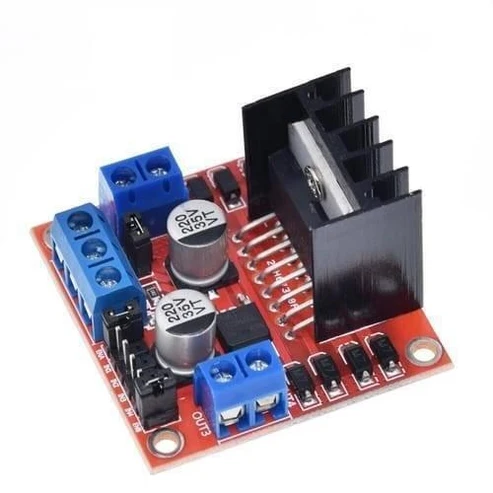
L298N Motor Driver
₨460
Need some help?
Contact Us
Product Ships in
2-3-business Days
Payment Methods:
L298N Motor Driver Module
The L298N Motor Driver Module is a popular electronic component used to control DC motors in robotics, automation, and DIY electronics projects. Built around the L298N dual H-bridge motor driver IC, this module allows users to control the direction of rotation of compatible DC motors and adjust their speed using suitable control signals. It is commonly used with Arduino boards and other microcontrollers for developing small robotic vehicles and motorized systems.
If you are looking for an L298N motor driver in Pakistan for an Arduino project, robot car, or electronics experiment, this module can be a practical choice when its electrical ratings match your application.
Key Features of the L298N Motor Driver
Dual H-Bridge Design: The L298N can control the direction of two brushed DC motors independently, subject to the module's wiring and configuration. It can also be used to control one bipolar stepper motor in suitable applications.
DC Motor Direction Control: The module allows connected DC motors to rotate forward or backward through appropriate input signals.
PWM Speed Control: Motor speed can be adjusted using pulse-width modulation (PWM) signals from a compatible microcontroller.
Arduino Compatibility: The module is commonly used with Arduino Uno, Arduino Nano, and other compatible development boards through suitable control connections.
Robotics Applications: It is useful for robot cars, line-following robots, obstacle-avoiding robots, and other projects that require motor control.
Convenient Module Format: Typical L298N modules include connection terminals and control pins to simplify wiring during prototyping.
Applications of the L298N Motor Driver Module
The L298N motor driver is widely used in educational robotics, electronics experimentation, and DIY automation. It can control the drive motors in two-wheel robot cars and suitable four-wheel robot chassis when the motor arrangement and current requirements are appropriate.
Students can use it for Arduino-based line-following robots, obstacle-avoiding vehicles, remote-controlled prototypes, and basic automation systems. It can also be used in projects involving compatible DC motors, small mechanical mechanisms, and bipolar stepper motors.
For a robot car, a microcontroller sends direction signals to the module and may provide PWM signals to regulate motor speed. This setup allows users to experiment with forward movement, reverse movement, turning, and different speed settings.
Compatibility and Power Requirements
Before purchasing an L298N motor driver module, check the voltage and current requirements of your motors, the module's ratings, and the power supply specifications. Different modules can vary in their onboard components and implementation.
The L298N is a bipolar transistor-based driver, so it has a noticeable voltage drop and can generate significant heat under load. Its practical output current depends on the operating conditions, cooling, and the specific module. Do not assume that it can continuously deliver its headline current rating without thermal limitations.
Use an appropriate motor power supply and connect the control ground correctly. Never power motors directly from Arduino GPIO pins. Check the module's onboard regulator and jumper configuration before applying power, and follow the documentation for your particular board.
Buy L298N Motor Driver in Pakistan
Digilog serves electronics enthusiasts, students, and robotics developers looking for components for their projects in Pakistan. The L298N Motor Driver Module is worth considering for learning motor control, building small robotic vehicles, and developing microcontroller-based prototypes.
Whether you are assembling an Arduino robot car, experimenting with DC motor speed control, or creating an educational automation project, selecting a suitable motor driver is essential for reliable operation.
Explore the L298N Motor Driver Module at Digilog and verify its specifications before ordering. Match the driver with your motors, power supply, and control board to build a suitable motor-control system.
Note: Exact voltage limits, current capability, heat dissipation, regulator arrangements, and included accessories depend on the specific module.