
Product Page
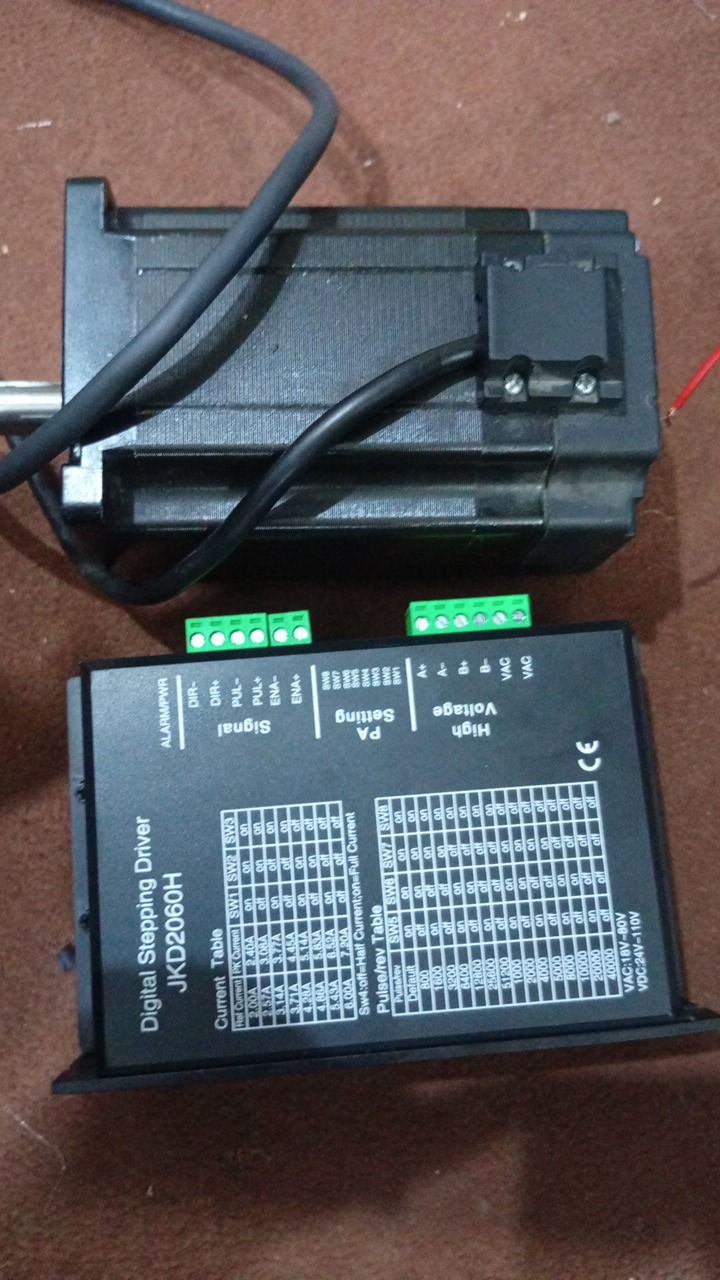
Stepper motor and Driver Leadshine Micro-stepper Motor M556C DMA860H
₨0
Need some help?
Contact Us
Product Ships in
2-3-business Days
Payment Methods:
Stepper motor and Driver Leadshine Micro-stepper Motor M556C DMA860H in Lahore Pakistan
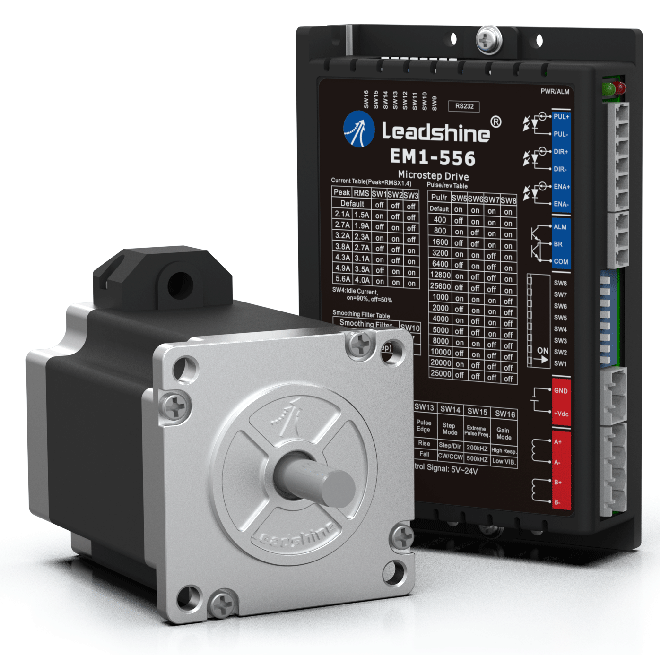
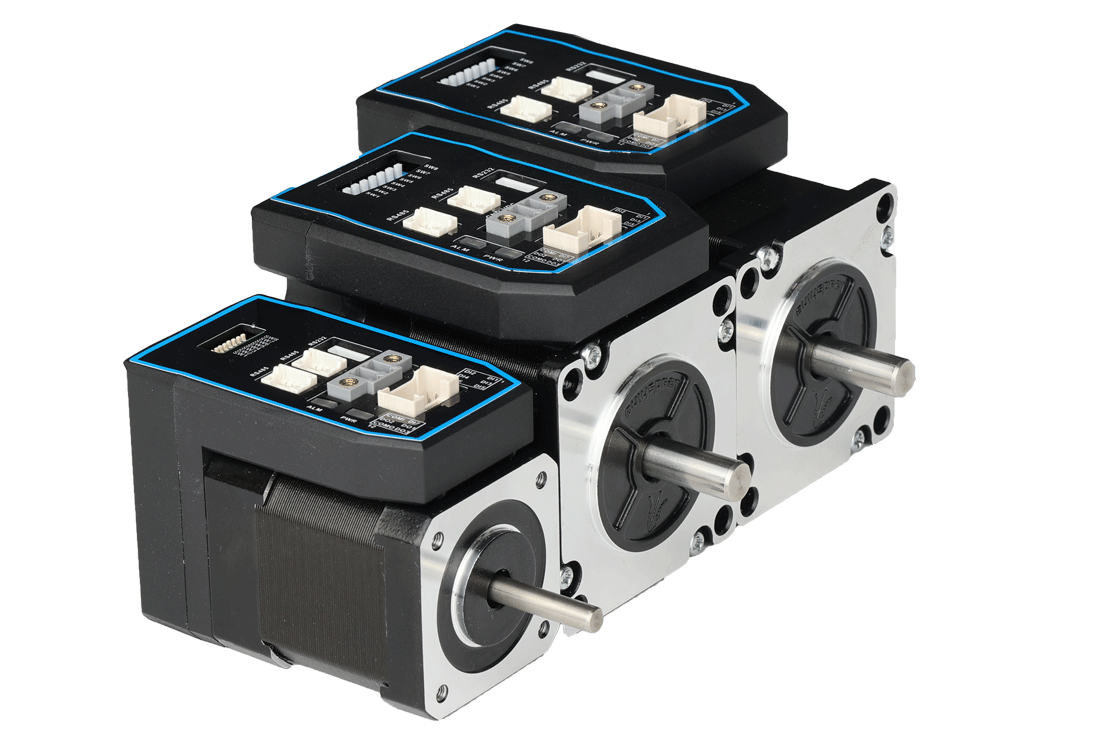

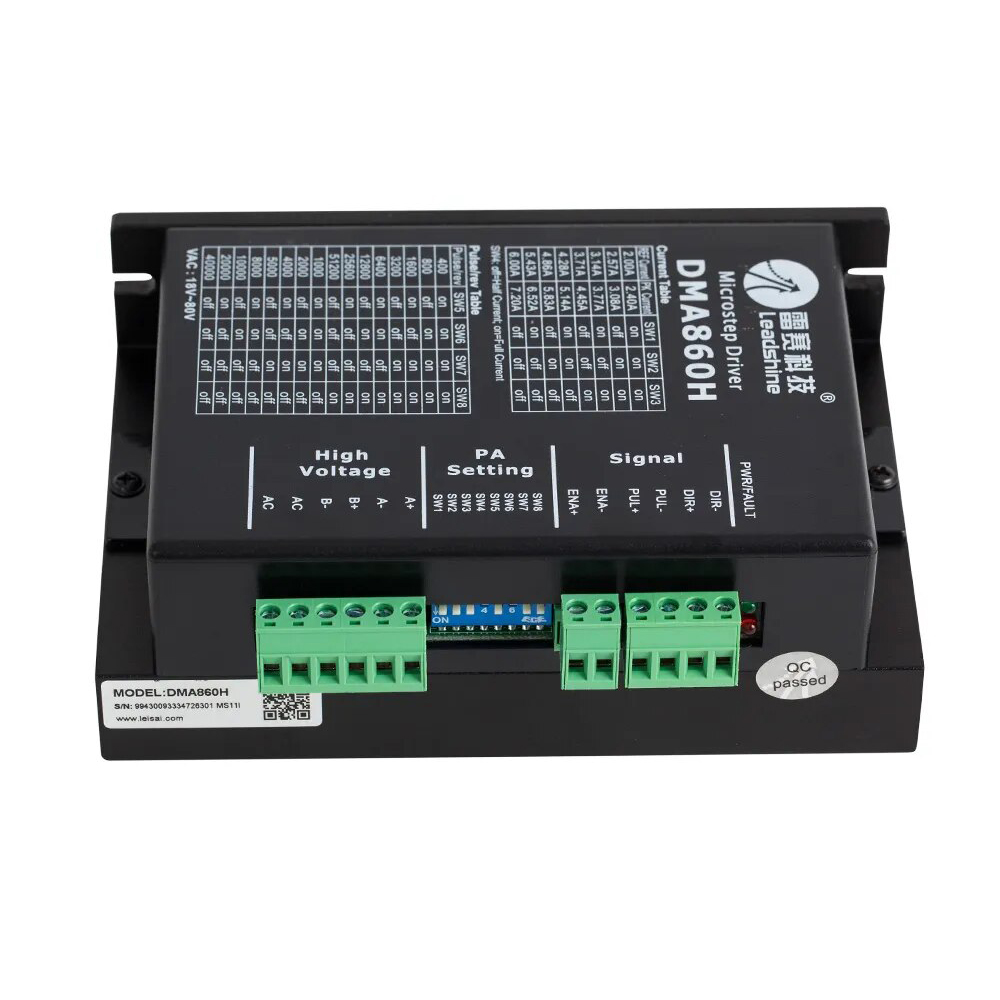
Here are some images of the Leadshine M556C stepper motor and the DMA860H micro-stepper driver for better visualization.
Product Details
1. Leadshine DMA860H Micro-Stepper Driver
-
General Overview: A high-performance microstepping driver powered by 32-bit DSP technology. Ideal for smooth, precise control of two-phase and four-phase hybrid stepper motors (e.g., NEMA 23 to NEMA 34).nkxmotor.sileadshine-store.com
-
Electrical Specifications:
-
Supply Voltage: AC 18–80 VAC or DC 24–110 V (some sources state up to 110 VDC)—depending on region and variantnkxmotor.sieaglecnctec.commachviet.comDeluXcnc
-
Maximum Current: Up to ~7.2 A peak, with selectable options ranging from 2.4 A to 7.2 Aeaglecnctec.commachviet.comDeluXcncleadshine-store.com
-
Microstepping: 16 selectable levels, up to 51,200 pulses per revolutionvattucnc.comleadshine-store.com
-
Input Frequency: Up to 300 kHz (some sources mention 200 kHz)vattucnc.comDeluXcnceaglecnctec.com
-
-
Core Features:
-
Pure-sinusoidal current control for whisper-quiet and vibration-free operationleadshine-store.comvattucnc.comDeluXcnc
-
Self-adjustment/self-tuning: tunes optimal current settings automatically for connected motorseaglecnctec.comvattucnc.comleadshine-store.com
-
Idle-current reduction: lowers current when motor is idle to reduce heat and power consumptioneaglecnctec.comvattucnc.comleadshine-store.com
-
Optically isolated inputs (e.g., PUL/DIR, CW/CCW) for improved noise immunityvattucnc.commathaelectronics.com
-
Built-in protections: over-voltage, over-current, short-voltage (or under-voltage) protectionmathaelectronics.comvattucnc.comleadshine-store.com
-
-
Typical Applications: Widely used in CNC routers, laser engravers/cutters, automated labeling machines, medical/measurement instruments, textile machinery, and other precise motion systemseaglecnctec.comvattucnc.comDeluXcnc
2. Leadshine M556C Stepper Motor Driver
-
Overview: A digital stepper driver for 2- or 4-phase stepper motors suitable for PUL/DIR or CW/CCW control. Known for smooth performance, low noise, and anti-resonance capabilitiessys-motor.com
-
Specs:
-
Input Voltage: 20–50 VDC
-
Peak Output Current: Up to 5.6 A (built-in selectable via DIP switches)
-
Input Signal Voltage: Typically 5 V logic, 7–16 mA signal currentsys-motor.com
-
Pulse Frequency: Up to 200 kHz
-
DIP-switch configuration: Adjust microsteps and current; includes idle-current reduction and automatic motor recognitionsys-motor.com
-
How to Use (Basic Setup Guide)
A. Wiring and Powering
For DMA860H:
-
Supply proper voltage (AC 18–80 VAC or DC 24–110 V) according to your model.
-
Connect the stepper motor coils to A+/A– and B+/B– terminals.
-
Set microstep and current via DIP switches per your motor specs.
-
Provide pulse and direction signals via PUL/DIR or CW/CCW inputs (optically isolated).
-
If your input voltage exceeds 5 V, use a series resistor per signal terminalmathaelectronics.com.
-
Power on and let the driver self-tune to optimize performance.
For M556C:
-
Similar wiring steps: connect motor coils, set DIP switches for microstep resolution and current, feed step/direction signals.
B. Configuration Steps
-
Microstep Resolution: Choose based on required precision—higher microstep settings yield smoother motion at the cost of more pulses per revolution.
-
Current Setting: DIP switches allow selecting the appropriate current to match motor rating.
-
Idle-Current Reduction Switch (SW4): Toggle this to reduce power draw/heating when the motor is idlemachviet.comcncsparetools.com.
C. Operation Notes
-
Start-up is smooth—built-in control minimizes “jumps” or resonance peaksmachviet.com.
-
Monitor input signal levels: use resistors when using 12 V or 24 V logic to protect optocouplersmathaelectronics.com.
-
During operation, the driver will handle microstepping and current management automatically; just provide correct pulse timing and direction.
Key Features Summary
| Feature | DMA860H | M556C |
|---|---|---|
| Technology | 32‑bit DSP, sinusoidal control | Digital, anti-resonance |
| Voltage Input | AC 18–80 VAC or DC 24–110 V | DC 20–50 V |
| Max Current | ~7.2 A (selectable) | 5.6 A peak (via DIP settings) |
| Microstepping | Up to 51,200 steps/rev | Configurable via DIP |
| Idle-Current Reduction | Yes | Yes |
| Self-Tuning | Yes | Yes |
| Input Signal Isolation | Optical isolation | Not explicitly mentioned |
| Protections | Over-voltage, over-current, short-voltage | Not specified |
| Applications | CNC, laser, automation, medical, etc. | Similar stepping control applications |
Conclusion
Both the DMA860H driver and the M556C provide advanced microstepping control and smooth performance with built-in tuning and protection. The DMA860H supports higher voltage and current levels plus enhanced features like optical isolation and sinusoidal control—great for demanding industrial applications. The M556C suits compact or moderate setups requiring configurable digital control via DIP switches.


