Product Page
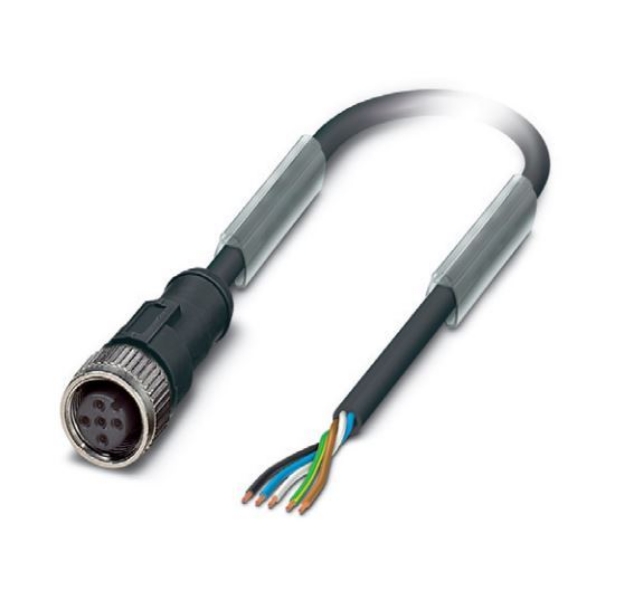
5 Pin Connector for Sensor Lead
₨0
Need some help?
Contact Us
Product Ships in
2-3-business Days
Payment Methods:
5 Pin Connector for Sensor Lead in Lahore Pakistan
5-Pin Connector for Sensor Lead
The 5-Pin Connector for Sensor Lead is designed for reliable and secure electrical connections in industrial and automation systems. This connector is perfect for connecting sensors and actuators to controllers, PLCs, and other control devices. The 5-pin configuration provides more flexibility compared to standard 3-pin connectors, enabling additional functionality and features, such as power, signal, and communication lines.
Product Details:
Model: 5-Pin Connector for Sensor Lead
Connector Type: 5-Pin Male/Female
Material: High-Quality Plastic / Metal (depending on version)
Cable Length: Varies (Customizable options available)
Pin Configuration: 5 Pins (Power, Ground, 2x Signals, Shield)
Rated Voltage: 24V DC (Common)
Current Rating: Typically up to 4A
Operating Temperature: -25°C to +85°C
Protection Rating: IP67 (Waterproof and dustproof)
Insulation Resistance: >100MΩ
Contact Resistance: <5Ω
Conductor Type: Copper wire
Connector Style: Straight or Right-Angled
Contact Material: Gold-Plated Contacts (for high conductivity and corrosion resistance)
Applications: Industrial sensors, automation systems, robotics, PLCs, actuators, and controllers.
Product Features:
-
5-Pin Configuration:
The 5-pin connector allows for more flexibility and advanced functionality in sensor wiring. The typical pin configuration includes:-
Pin 1: Power (+V)
-
Pin 2: Ground (GND)
-
Pin 3: Signal 1 (Sensor Output/Input)
-
Pin 4: Signal 2 (Additional Sensor Output/Input or Control Signal)
-
Pin 5: Shield (Grounding or Noise Protection)
This setup is especially useful for sensors that require multiple signals or power and ground connections.
-
-
Durable and Long-Lasting Construction:
The connector is built with high-quality materials to ensure a durable, long-lasting connection. The gold-plated contacts improve conductivity and reduce the risk of corrosion, which is essential in industrial environments. -
IP67 Protection Rating:
With an IP67 rating, the connector is dust-tight and waterproof, making it suitable for demanding environments exposed to moisture, dust, and other contaminants. This ensures reliable performance even in harsh conditions. -
Secure and Easy Installation:
The connector design allows for a quick and secure connection with sensors, actuators, and controllers. The locking mechanism ensures that the connector stays securely in place, preventing accidental disconnections. -
High Temperature Resistance:
The connector can operate effectively in temperatures ranging from -25°C to +85°C, making it suitable for a wide range of industrial environments, from cold storage to high-heat zones. -
Versatile Connector Options:
The connector is available in both straight and right-angled configurations to suit different installation preferences and spatial requirements. -
Standardized Compatibility:
The 5-pin connector is commonly used in industrial sensors and automation equipment, ensuring compatibility with a wide variety of devices, making it a reliable choice for connecting sensors to control systems.
How to Use the 5-Pin Connector for Sensor Lead:
-
Preparation:
-
Ensure you have a compatible 5-pin connector for your sensor or actuator.
-
Identify the wire colors and corresponding pins based on the sensor’s wiring diagram (refer to your device’s datasheet or user manual for pinout information).
-
-
Wiring the Connector:
-
Pin 1 (Power): Connect this pin to the positive voltage supply (typically +24V DC or as specified by the sensor).
-
Pin 2 (Ground): This pin is used to ground the sensor or actuator, completing the electrical circuit.
-
Pin 3 (Signal 1): This pin is typically used for signal output or input. Connect it to your control system (e.g., PLC, controller).
-
Pin 4 (Signal 2): This pin can be used for additional signal lines or a secondary output/input from the sensor (e.g., another sensor’s feedback or a control signal).
-
Pin 5 (Shield): This pin is used to shield the cable from electrical noise and interference. It should be grounded to protect the signal quality.
-
-
Connecting the Cable:
-
The wires from your sensor lead will need to be stripped and inserted into the appropriate pins of the 5-pin connector. Secure them using the locking mechanism to ensure they are firmly in place.
-
Some connectors may have screw terminals or crimp terminals to fasten the wire connections.
-
-
Securing the Connector:
-
Once the wires are connected to the 5-pin connector, plug the connector into the matching port on your sensor or actuator. If the connector has a locking mechanism, twist or snap the connector into place to ensure a secure connection.
-
-
Testing and Calibration:
-
Power on the system and test the sensor or actuator functionality to ensure proper signal transmission and performance.
-
If the system involves multiple signals or control functions, ensure that the wiring for Signal 1 and Signal 2 is properly routed to the correct control devices.
-
-
Maintenance:
-
Regularly inspect the connector for any signs of wear, corrosion, or damage, especially if exposed to harsh environmental conditions.
-
Check that the connector is firmly seated and properly shielded to prevent signal interference.
-
Applications of the 5-Pin Connector for Sensor Lead:
-
Industrial Automation:
The 5-pin connector is widely used to connect sensors, actuators, and control systems in automation processes, ensuring reliable signal transmission. -
Control Systems:
The 5-pin connector is ideal for connecting sensors to PLCs, robots, or controllers, enabling communication and data transfer for operational control. -
Temperature and Pressure Sensing:
Used in applications such as temperature, pressure, and flow monitoring systems, the connector enables easy wiring for accurate measurement. -
Robotics:
The 5-pin connector is commonly used in robotic systems to connect proximity sensors, position encoders, or other devices requiring multiple signals. -
Process Monitoring:
In manufacturing or chemical plants, where multiple sensors need to be connected for process monitoring, the 5-pin configuration allows for simple integration of different signals. -
Machine Vision:
Used in machine vision systems where sensors need to be connected for detecting objects, items, or quality checks on a production line. -
Motion Control:
Perfect for motion sensors or actuators used in controlling the movement of parts in a manufacturing or assembly process.
Advantages of the 5-Pin Connector for Sensor Lead:
-
Secure and Reliable Connection: Provides a stable connection, reducing the risk of disconnection in high-vibration or industrial environments.
-
Multiple Signal Transmission: Ideal for complex systems that require multiple signals (e.g., power, ground, two signals, and shielding).
-
Durability in Harsh Conditions: With an IP67 rating, it offers protection against dust, moisture, and other contaminants, ensuring reliable performance.
-
Flexible Installation Options: Available in both straight and right-angled configurations, offering flexibility in tight spaces.
-
Easy to Use: Simple wiring and installation, with secure locking mechanisms that reduce installation time and effort.
Conclusion:
The 5-Pin Connector for Sensor Lead is an essential component for connecting industrial sensors and actuators to control systems, providing a secure and durable solution for signal transmission. Its IP67 protection ensures that it works reliably in harsh environments, while its versatile 5-pin configuration allows for multiple signal and power connections, making it a flexible and dependable choice for industrial automation systems.